

You can still make money from Q4 2026, but the honest window has changed. The broad preparation phase is over, the peak weeks are close, and the publishers who plan now will also walk into Q4 2027 with data instead of guesses. That is the point of a practical Q4 ad revenue plan in mid October: run a tight finish to this year, record exactly what happened, and turn those records into earlier deals, better pages, and stronger demand for next year.
This guide splits the work into two jobs. Job one is a controlled sprint to November 30, 2026, with no risky rebuilds. Job two starts in December and January, when you reset seasonal settings, write your baseline, and fix what limited you this year. No CPM lift is promised here. You get a sequence you can run, with evidence and limits stated.
Why the Timing Has Changed
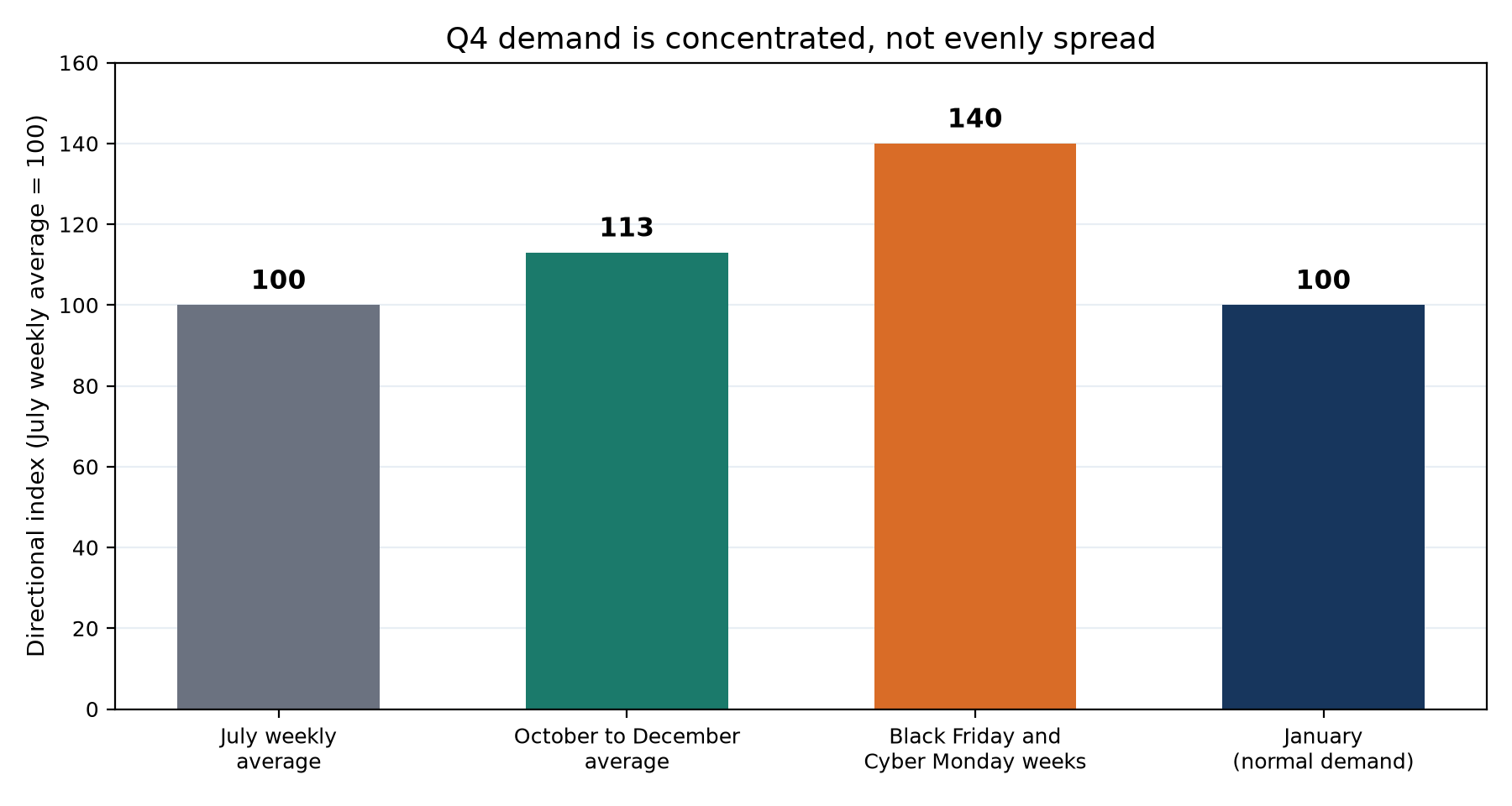
Google Ad Manager describes a familiar seasonal shape: traffic and CPMs generally begin rising in September, peak in late November, and return to normal in January. Publift, in guidance published on October 8, 2026, puts the execution deadline in mid October and calls October the last window to test layouts, refresh seasonal pages, and package premium inventory. Read together, those two points matter. If you are starting on October 16, you are not early for Q4 2026. You are at the edge of the safe testing window.
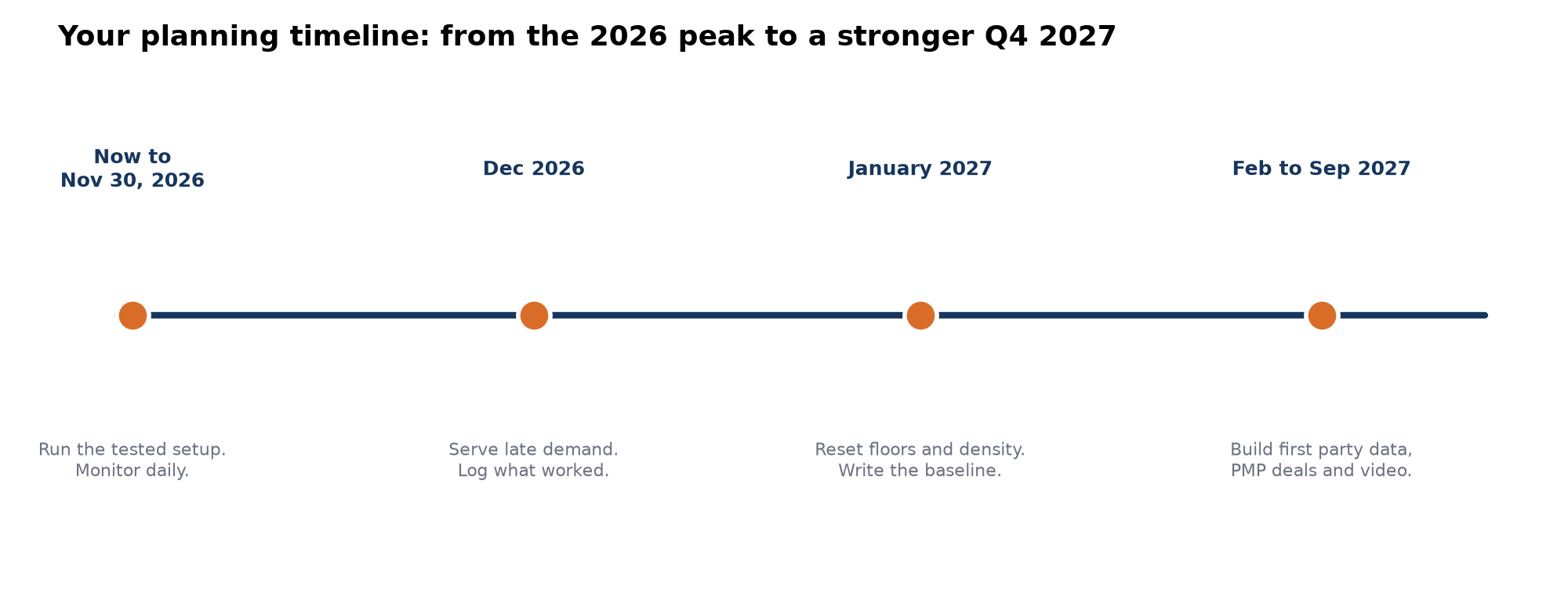
That does not make this quarter a write off. PubFuture lists the concentrated demand window from Singles Day on November 11 through Thanksgiving on November 26, Black Friday on November 27, and Cyber Monday on November 30, followed by the pre Christmas shopping period in December. The money is still ahead of you, but the work changes. October is for small, reversible checks. November is for monitoring and accuracy. December is for serving late demand and taking notes that will make next year easier.
Search behaviour points the same way. In a Google Trends check of United States interest over five years, run on October 16, 2026, Black Friday CPM was quiet most of the year and spiked in November, with its highest week dated November 23, 2025. Ad revenue forecast was strongest in January to March monthly averages. These are relative patterns, not volumes, and niche phrases are sporadic, so treat them as timing signals only: CPM help is sought at the peak, forecasting help at the new year. No Search Console data was available, so no volume is claimed.
What the Market Data Says About 2027
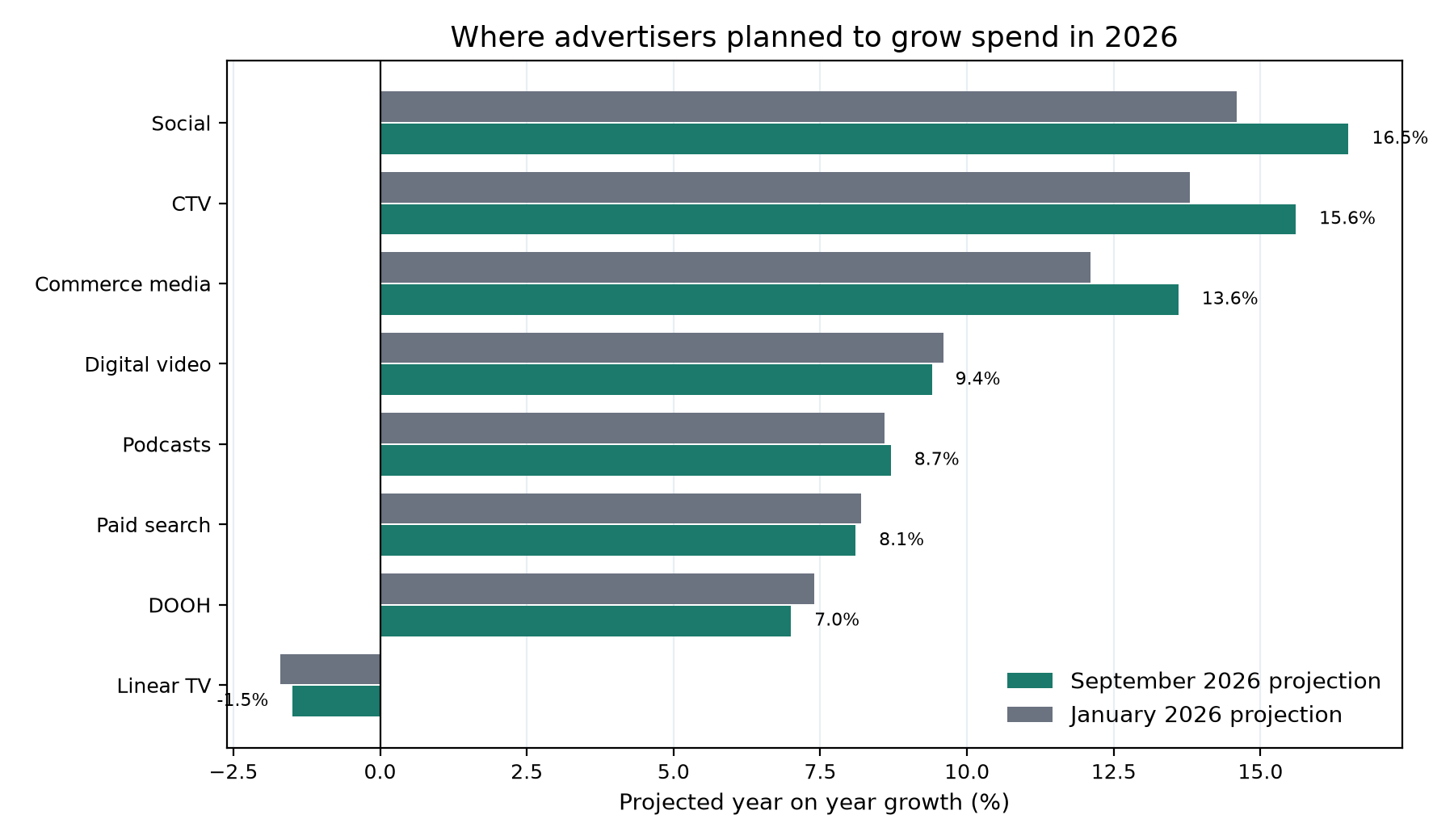
The reason to start 2027 work now is not optimism. It is where advertiser budgets are moving. The IAB raised its full year United States ad spend growth forecast for 2026 to 12.3 percent on September 10, 2026, up from 9.5 percent in January, based on responses from more than 200 brand and agency decision makers. In the same update, the fastest growing channels were social media at 16.5 percent, connected TV at 15.6 percent, and commerce media at 13.6 percent, while linear TV was projected to fall by 1.5 percent. Buyers also reported increased focus on publishers with first party data at 48 percent and contextual advertising at 45 percent.
For open web publishers, growth is not evenly shared. Publift’s 2027 forecasting guide, also published on October 8, 2026, shows illustrative paths: publishers with strong first party signals and direct or private marketplace demand may see eCPMs up by about 10 to 20 percent in one scenario, while open exchange dependent publishers may face pressure of about 20 to 30 percent. Those are vendor scenarios, not guarantees. The direction is clear: addressability, curated deals, and premium formats are where buyers are heading.
INMA made a similar point on October 14, 2026: demand is shifting toward quality inventory, low ad density, and content quality, with a move toward private marketplaces and direct deals. You do not need to rebuild this month. You do need to know which pages could support a curated deal next year, which audiences you can describe with consented first party data, and which formats you can offer without hurting reading.
Your Q4 Ad Revenue Plan for the Rest of 2026
Step 1: Lock the setup and stop experimenting with the core stack
Freeze the risky work. Do not introduce a new wrapper, a new template, or an untested script during Cyber Week. If a placement test is already running and you can read the result cleanly, finish it. If a change cannot be reversed in minutes, park it until January. Stability is worth more than a clever idea when each session carries peak season value.
Do a short safety pass instead. Check fixed ad space, sensible below the fold loading, dismissible sticky units, and no format covering navigation on a phone. Test on a real mobile device. Adobe figures cited by Publift put smartphones at 56.4 percent of United States online holiday transactions in November and December 2025, so a mobile fault in Q4 is a revenue fault.
Step 2: Refresh only the pages that can still win
You do not have time to rewrite the site, and you do not need to. Pick the seasonal pages that already rank, already earn, or already match November intent: gift guides, comparisons, reviews, and explainers tied to shopping, travel, food, home, or entertainment. Update facts, prices, availability, shipping dates, and internal links. Make sure each page still answers the query its title promises.
Keep recurring pages on stable URLs, and note why you chose each page: last year’s revenue, current rankings, or Black Friday intent. That note becomes your first 2027 page list.
Step 3: Monitor daily in November, and compare like with like
From November 11 to November 30, check revenue per thousand impressions, CPM, fill rate, viewability, latency, unfilled impressions, and page level revenue every day if you can. Segment by device, geography, traffic source, and ad unit before you react. Compare this Monday with recent Mondays, and mobile with mobile. A single strong or weak day is weather. A pattern across the same segment is a signal.
Change only inside tested ranges. Move floors gradually by segment and keep a dated log. Google Ad Manager guidance favours target CPM in pricing rules over fixed floors alone, because pricing can adjust as bids change. Without the log, you cannot tell in January whether the market helped you or your change did.
For a calm method you can follow before you touch live layouts, work through the MonetizePros guide to A/B testing ad placements, and keep the overview of seasonal RPM trends nearby so you judge your numbers against the seasonal shape, not against a quiet month.
Step 4: Keep commercial pages accurate through December
December still pays, but it pays for accuracy. Last minute shoppers need current prices, real delivery dates, and honest availability. Update gift, travel, and delivery deadline pages through the middle of the month, and remove or correct offers that have ended. A page that sends a reader to a dead deal earns less trust, and trust is part of what makes premium inventory premium.
At the same time, prepare the reset. List every floor rule, refresh setting, seasonal placement, and density choice that should return to normal before December 31. Name the person who will make each change and the date it will happen. Peak season settings should never drift into January because nobody wrote them down.
Build the 2027 Plan While This Year Is Still Fresh
Step 5: Write your baseline in January, before memory fades
In the first two weeks of January, close the year properly. Record sessions, pages per session, viewable impressions per page, blended eCPM, fill, viewability, and revenue by device, geography, and page group. Note which deals ran, which pages carried them, and which changes you made in November, with dates. This is not admin for its own sake. It is the raw material of every forecast and every buyer conversation you will have in 2027.
Publift’s forecasting model is simple: sessions times pages per session times viewable impressions per page gives total viewable impressions, multiplied by blended eCPM for a revenue estimate. Adjust for demand mix, first party readiness, private marketplace share, and video. Run cautious, middle, and stronger cases, with the assumption beside each number.
Step 6: Fix the three assets buyers will pay more for
First, first party data. List the consented signals you actually hold, such as topic interests from newsletter signups, account activity where you have accounts, or engagement segments built from your own analytics. Check consent wording and retention before you promise any segment to a buyer. A small, honest, well described audience is worth more than a large vague one.
Second, deal ready pages. Pick sections with clear context, strong viewability, stable traffic, and brand safe surroundings. Prepare what buyers ask first: expected peak volume, geography and device split, formats, and delivery dates. You are making it easy to say yes early, not guaranteeing results.
Third, premium formats you can run well. If video fits, test one placement with reserved space, no autoplay with sound, and tracking for viewability and latency. If not, improve existing display. Better viewability usually beats a new format that slows the page.
Step 7: Work the calendar backwards from November 2027
Put real dates in the diary now. September 2027 is for refreshing seasonal pages and opening deal conversations. Early to mid October 2027 is the execution deadline for tested layouts, updated pages, and packaged inventory. November 2027 is for monitoring, not building. December 2027 is for late demand and the reset list. When a task slips, you will see it slip in September, while there is still time to recover.
Use January to March for the deeper work that never fits in Q4: template performance, consent and identity checks, direct buyer outreach, and video tests. Use spring and summer to publish and refresh the evergreen pages that will carry next Q4, so they have months to be crawled, ranked, and linked before the peak. Compare your progress against the MonetizePros display ad benchmarks guide instead of judging a quiet month by November standards, or the reverse.
What Not to Do
- Do not rebuild your ad stack during Cyber Week. New tags, wrappers, or templates add risk at the exact moment each session is worth most.
- Do not add placements just because CPMs are rising. Extra units can cut viewability, slow the page, and teach readers to ignore your ads.
- Do not judge success on CPM alone. Track fill, impressions, session revenue, viewability, and engagement beside it.
- Do not copy a vendor uplift as your forecast. A scenario from another publisher or platform describes their inventory, not yours.
- Do not let Q4 settings run into January. Floors, density, and seasonal pages all need an explicit reset date and owner.
- Do not wait until next October to start next Q4. The pages, data, and deals that pay in November are built across the year.
A Calm Finish and a Stronger Start
You cannot control how much advertisers spend this holiday season, and you should not pretend otherwise. You can control whether your best pages are accurate, your placements are viewable, your mobile layout holds up, your changes are logged, and your January reset is written before December ends. That discipline is what turns one busy quarter into an asset for the next one.
Start this week with the short version: freeze risky changes, refresh the few pages that can still win, and set your November monitoring rhythm. Then book the January baseline session now, while the season is still in front of you. The publishers who do that work will not just finish 2026 well. They will start Q4 2027 in September, with evidence, inventory, and buyers already lined up.
Sources
External links are kept short on purpose. The claims above are drawn from these named sources, checked on October 16, 2026.
- IAB, 2026 Outlook Study: September Update and forecast release, September 10, 2026. Read the IAB forecast
- Google Ad Manager, Seasonality guidance. Read the Google seasonality guidance
- Publift, Holiday Season Strategy for Publishers in 2026, October 8, 2026. Read the Publift holiday strategy
- Publift, Ad Revenue Forecasting 2027: A Publisher’s Guide, October 8, 2026. Read the Publift 2027 forecasting guide
- INMA, As the traffic ad model ends, publishers need a new advertising playbook, October 14, 2026. Read the INMA advertising playbook