Self-serve ads can help publishers pursue direct Black Friday demand. DanAds says competition from mega-retailers can push search and social auction CPMs up 30% to 50%, although its article does not provide a methodology for that range. Publishers can test clear packages and simpler campaign setup for smaller advertisers ahead of Black Friday on November 27, 2026.
This guide is about direct and self-serve ad sales during the holiday squeeze. It is not a programmatic eCPM ops checklist and not an affiliate commission playbook. It is a practical plan for opening inventory to SMBs that want predictable, brand-safe alternatives while walled-garden auctions spike.
Table of Contents
What Self-Serve Ads Mean for Holiday Publishers
Self-serve ads put campaign setup in the advertiser’s hands. Instead of waiting on insertion orders and back-and-forth creative reviews, buyers explore packages, pick audiences or contextual placements, upload creative, set budgets, and launch. For publishers, that shortens the sales cycle when holiday calendars move by the day.
DanAds frames the holiday opportunity clearly: Black Friday is advertising season, not only a shopping day. With Black Friday on November 27 and Cyber Monday on November 30 in 2026, budgets are fragmented and competition for attention is intense. Publishers that make inventory easier to discover, buy, and activate are the ones that convert seasonal demand into revenue.
If your team already runs programmatic deals, keep that muscle. Self-serve is the layer that catches advertisers who will not wait for a private marketplace negotiation during the busiest two weeks of the year. For deal structure depth, see our guide to programmatic deals for publishers.
Why the Black Friday CPM Squeeze Creates SMB Demand
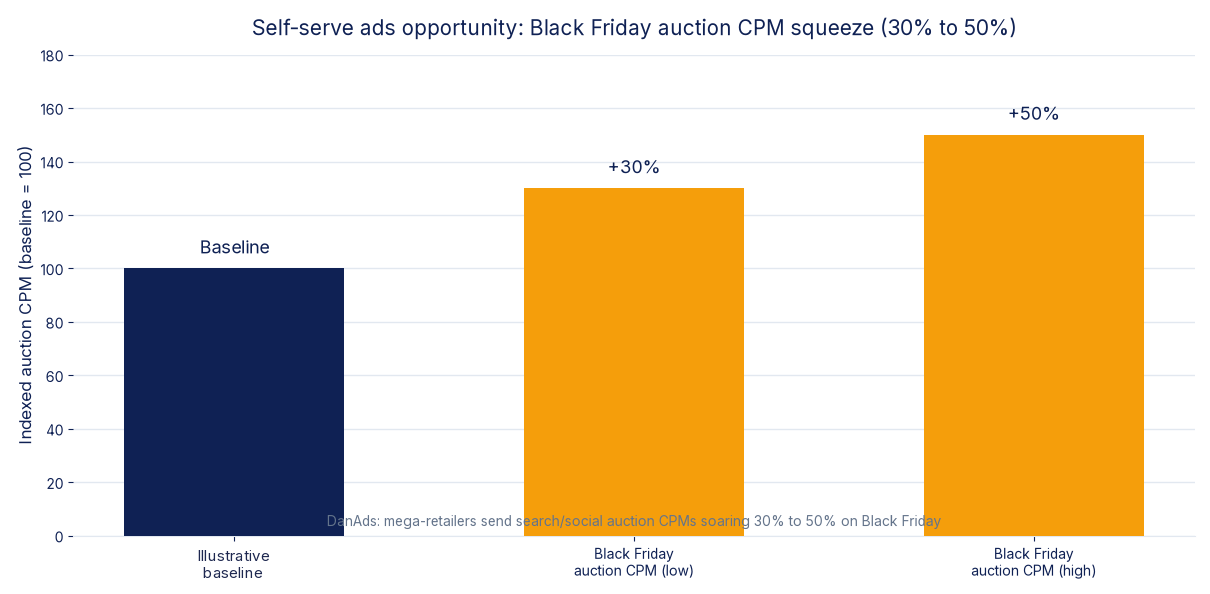
DanAds says Black Friday competition on search and social can raise auction CPMs by 30% to 50%. The vendor presents direct publisher inventory as an alternative for smaller advertisers facing those higher costs.
DanAds argues those SMBs are not sitting out the season. They are looking for predictable, brand-safe alternatives. Direct self-serve access through an ad manager lets publishers position authenticated, first-party audience environments as a stable option when social feeds get volatile. Speed matters: an automated ad manager can turn high-intent holiday traffic into campaigns launched in minutes instead of multi-day sales cycles.
That is a different job than optimizing open auction eCPMs inside your ad stack. Holiday auction ops still matter, and our Cyber Week eCPM guide covers floors, formats, and timing for that work. Self-serve ads attack a separate problem: converting priced-out direct demand before it disappears into another publisher’s portal.
Early Shopping Means Your Self-Serve Window Starts Now
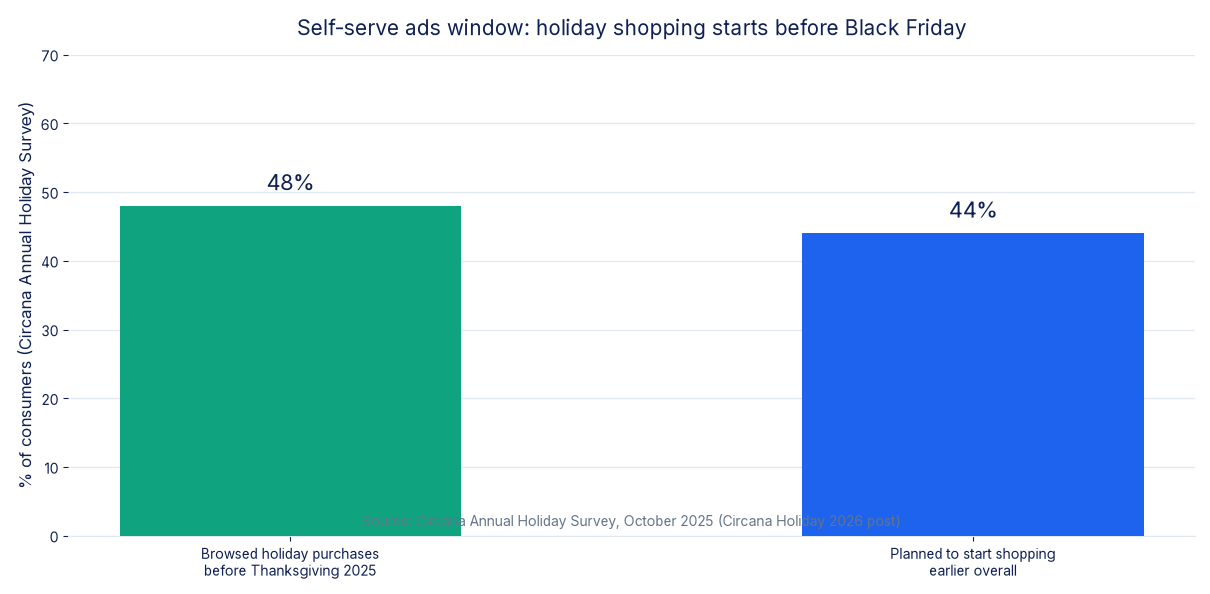
Waiting until Black Friday morning to open self-serve inventory is too late. Circana’s Holiday 2026 advertising analysis, drawing on its Annual Holiday Survey from October 2025, reports that 48% of consumers browsed for holiday purchases before Thanksgiving in 2025, and 44% planned to start shopping earlier overall.
According to Circana, a media plan that begins at Thanksgiving reaches many shoppers after their holiday shopping is already under way. Publishers can package inventory around early holiday research, product comparisons, and seasonal guides, then offer packages that run from early November through Thanksgiving.
DanAds makes the same publisher point: activate advertiser demand earlier and you capture revenue across a longer seasonal window, not only on peak promotional days. Self-serve ads help because smaller advertisers can start a test budget in early November without waiting for your sales team to clear November 27 priority deals.
CTV Intent Is Rising, and Self-Serve Lowers the Barrier
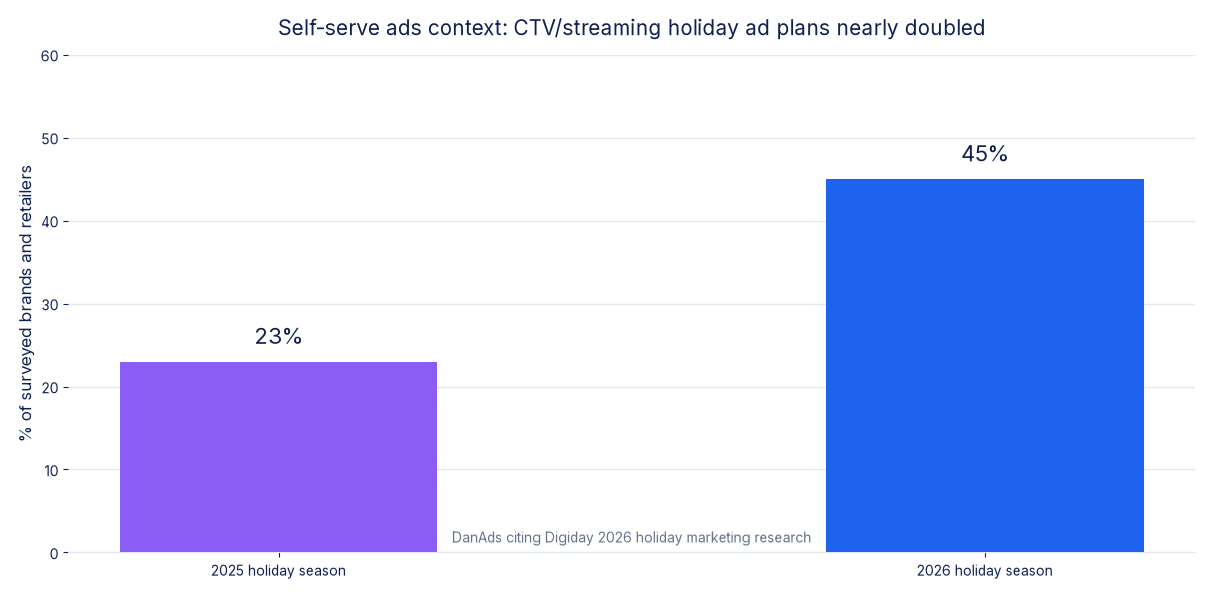
Digiday’s 2026 holiday marketing report, based on a survey of 90 brand and retailer professionals, says 45% of respondents planned to use CTV or streaming ads during the 2026 holiday season, compared with 23% who said the same in 2025. These are survey responses about plans, not measured spending.
Traditional TV buying can stay complex for smaller advertisers with limited budgets and tight timelines. Self-serve ad manager platforms reduce those barriers by letting advertisers explore inventory, select packages, and launch through simplified workflows. Nine’s September 2023 launch announcement described Nine Ad Manager as a self-service platform for buying video advertising on 9Now, with audience targeting and AI-assisted video creation. The announcement identified Australia’s 2.5 million small and medium businesses as its potential market, not as a count of advertisers using the platform.
If you already sell CTV or premium video, consider a self-serve option for smaller advertisers. For broader CTV packaging strategy, see CTV advertising for publishers. Agent-ready and automated buying trends are covered in our agentic advertising guide.
5 Practical Ways to Win Holiday Demand With Self-Serve Ads
1. Open a clear SMB package before auction CPMs spike
Productize three to five holiday packages with transparent pricing, minimum budgets, and brand-safe placement rules. DanAds stresses that priced-out SMBs want predictable alternatives. Give buyers a clearly documented route to purchase alongside any custom IO process.
2. Sell the early November research window, not only Black Friday dayparts
Use Circana’s early browsing data in your sales narrative. Offer flights from early November through Thanksgiving for comparison and gift-guide environments, then optional extensions into Black Friday and Cyber Monday.
3. Make CTV or premium video reachable for smaller budgets
Where you have video inventory, publish self-serve entry points with creative specs, frequency caps, and starter budgets. Digiday’s surveyed respondents reported greater planned use of CTV or streaming ads in 2026 than in 2025. That is a reason to test accessible packages, not proof of demand for a particular publisher’s inventory.
4. Cut activation time to minutes, not days
DanAds lists faster campaign activation, flexible buying options, clearer product and pricing transparency, and simplified management as strategic advantages of modern ad manager platforms. Holiday promotions change quickly. Friction is revenue left on the table.
5. Treat Black Friday as advertiser acquisition, not only a CPM spike
DanAds describes the holiday rush as a cost-effective advertiser acquisition window. Onboard SMBs now, keep them spending after the rush, and you build a direct roster that is less dependent on walled-garden overflow next year. Affiliate teams will chase holiday commissions separately. Keep the self-serve motion focused on direct sold demand.
Publishers can test self-serve inventory, early-shopping packages, and simpler CTV or premium-video buying to pursue holiday demand. DanAds presents these as opportunities, not guaranteed revenue outcomes.
Frequently Asked Questions
What are self-serve ads for publishers?
Self-serve ads let advertisers explore inventory, choose packages, upload creative, set budgets, and launch campaigns through an ad manager instead of waiting on a long manual sales cycle.
How much can Black Friday auction CPMs rise?
DanAds says Black Friday competition from mega-retailers can raise search and social auction CPMs by 30% to 50%. Its article does not provide a methodology for that range.
When is Black Friday 2026?
DanAds notes that Black Friday falls on November 27 and Cyber Monday on November 30 in 2026.
How early do holiday shoppers start?
Circana’s Annual Holiday Survey from October 2025 found that 48% of consumers browsed before Thanksgiving in 2025 and 44% planned to start shopping earlier overall.
Are brands planning more CTV for the 2026 holidays?
DanAds, citing Digiday research, says 45% of surveyed brands and retailers planned CTV or streaming ads for the 2026 holiday season, up from 23% in 2025.
What is an example of self-serve opening inventory to SMBs?
Nine’s September 2023 launch announcement described Nine Ad Manager as a self-service platform for buying video advertising on 9Now, with audience targeting and AI-assisted video creation. It identified Australia’s 2.5 million small and medium businesses as the potential market, not as a count of advertisers using the platform.