

Search ads used to be simple. You picked keywords, wrote a clever ad, and hoped people clicked your link on a boring blue-results page. Easy, right? Well… not anymore.
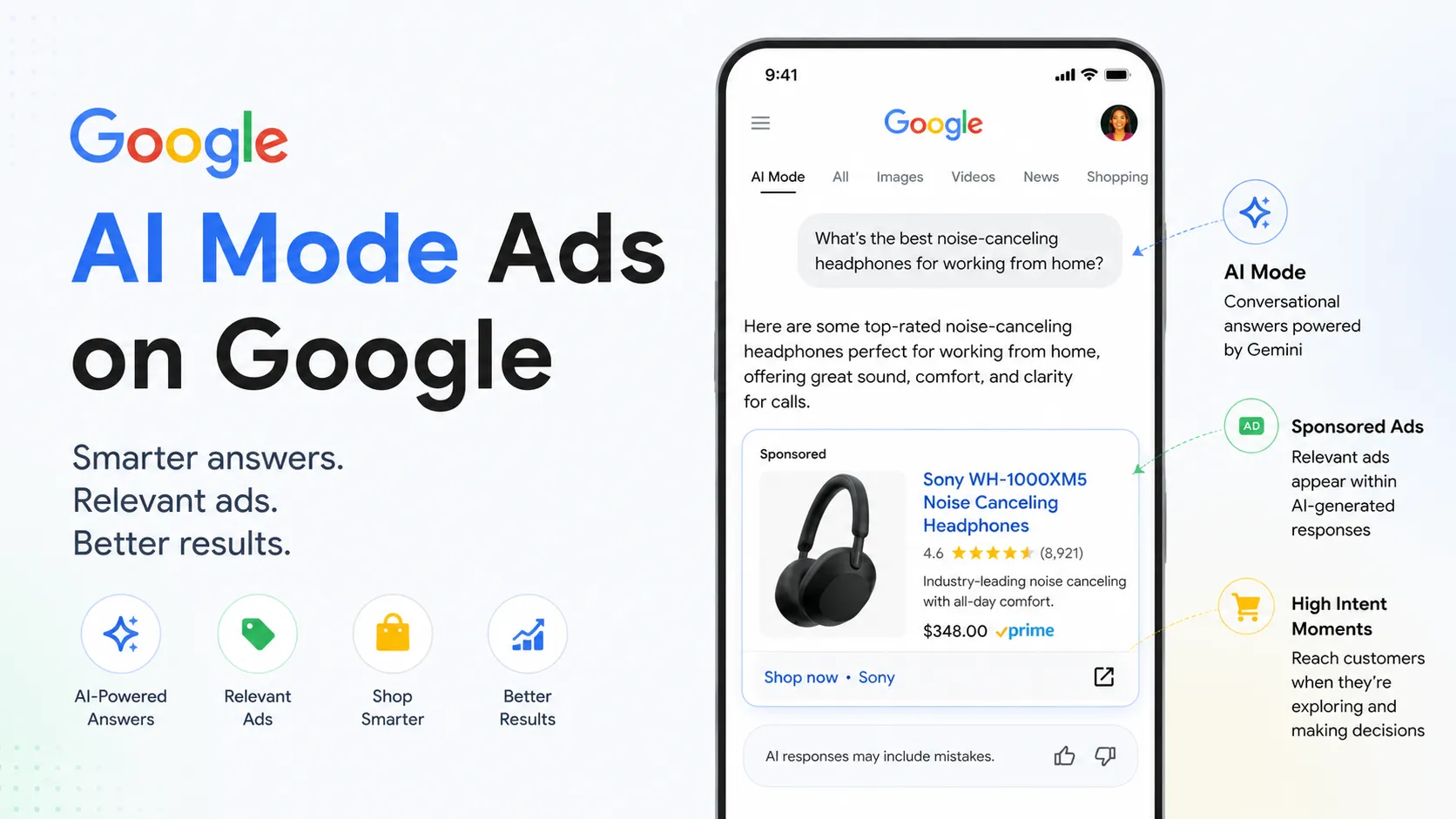
Google just flipped the whole game. With its new AI Mode (powered by Gemini), search feels more like chatting with a super-smart assistant than scrolling through links—and yep, ads are showing up there too.
This isn’t a small tweak. It’s like going from flip phones to smartphones overnight. The way people discover stuff, compare options, and decide what to buy is changing fast. So if you’re running ads, it’s not about if you adapt—it’s about how fast you can keep up before everyone else does.
What is Google AI Mode? Why Does it Matter For Ads?
Think of old-school Google like a list of links you had to dig through. AI Mode? It’s like texting a genius friend who just gives you the answer straight up. No clicking, no hunting—just a full conversation. You can ask complicated questions, change your mind mid-way, and it keeps up.
Here’s the catch: if people aren’t clicking links anymore, a lot of websites lose traffic. That’s the scary part. But here’s the exciting part—ads now show up inside those answers. Right when someone is thinking, comparing, or about to buy. It’s like showing up exactly when your friend asks, “Hey, what should I get?”
Google is already testing this, and they’re not playing around. This is where search is going, whether people like it or not.
How Ads Actually Appear in AI Mode
This is where things get wild. Before, ads showed up because you matched a keyword. Simple. Now? Google is basically reading the entire conversation and deciding what makes sense.
Imagine you ask, “How do I waterproof my hiking boots for a rainy trip?” You didn’t search for a product—but boom, you might see an ad for boot spray anyway. That’s AI thinking ahead for you.
Right now, you’ll mostly see Search and Shopping ads, labeled “Sponsored” like usual. But they don’t just sit at the top anymore—they can pop up above, below, or even inside the answer.
So yeah, ads aren’t just following keywords anymore… they’re following intent. And that changes everything.
Which Campaign Types Are Eligible and Which Aren’t?
Here’s where a lot of advertisers mess up—they try to play the old game in a completely new world.
You can’t just set up a basic keyword campaign and expect to show up in AI Mode. Google’s basically saying, “Hey, if you want in, let me drive.” That means using its AI-powered campaigns.
The ones that work?
- Performance Max (PMax) — the “I’ll handle everything” option
- AI Max for Search — the newest, fastest-growing tool (and honestly, the most direct way in)
- Broad match campaigns — kind of the middle ground if you’re not ready to go full AI
- Shopping campaigns (especially with AI Max upgrades)
What doesn’t work? Super strict, old-school setups like exact match or manual bidding. That’s like bringing a flip phone to a smartphone party—it technically works, but you’re missing everything that matters.
Google’s not being subtle here. Automation isn’t optional anymore. It’s the direction.
The Reporting Gap Advertisers Should Know About
Now here’s the frustrating part. Imagine playing a video game… but you can’t see your score. That’s kind of what AI Mode reporting feels like right now.
You can’t tell exactly which clicks or sales came from AI Mode. It’s all mixed in with your regular campaign data. Google even admits they’re still figuring this out.
So what do you do? You look at the bigger picture—are you reaching more people? Are you showing up for new types of searches? Are conversions going up?
And here’s the exciting part: early results are kind of insane.
- +18% more unique search categories converting
- +19% more overall conversions
- One brand, Aritzia, saw revenue jump by 80%
So yeah, the tracking isn’t perfect yet… but the opportunity? It’s huge.
New Tools Shaping AI Mode Advertising
Okay, so Google isn’t just saying “trust the AI, good luck.” They’re actually giving you some controls—but you have to learn how to use them.
- AI Brief — This is like giving the AI instructions before it speaks. You can literally say things like “don’t talk about price” or “focus on eco-friendly buyers.”
- Smart Bidding Exploration — Think of this as AI going off the beaten path. It looks for weird, unexpected searches that might convert, stuff you’d never think to target yourself.
- Business Agent — Still experimental, but super interesting. It lets brands shape how the AI talks about their products… like having a mini sales rep living inside Google.
- Direct Offers — This is where it gets spicy. Imagine someone is about to buy, and boom—you drop a personalized deal right in front of them.
You’re not losing control—you’re just learning how to guide something way smarter than manual ads.
A Practical Advertiser Checklist For AI Mode
Don’t overcomplicate this. You don’t need to rebuild everything—you just need to adapt smartly.
- Drop the old-school mindset—campaigns using only exact or phrase match won’t even show up
- Turn on AI Max in at least one campaign and watch what happens over a few weeks
- Keep your product data clean and updated (messy data = bad AI results)
- Use AI Brief to teach the system your brand voice—otherwise it’ll just guess
- Keep building strong content—AI still favors brands that actually know their stuff
- Set clear goals (like ROAS or CPA), or the AI won’t know what “winning” looks like
- Stay alert—better reporting is coming, and early movers will have the advantage
Think of it like learning to drive a self-driving car. You’re not steering every second anymore—but you still decide the destination.
What This Means For The Broader Advertising Landscape
Everyone’s trying to figure this out right now. Perplexity tested ads… then pulled back. Amazon tried ads inside its Rufus assistant… didn’t get much traction. Even OpenAI is like, “Yeah, maybe we’ll do ads… someday.”
But Google? Totally different story.
Google isn’t starting from scratch. They’ve got insane scale (trillions of searches), years of ad data, and systems that have been battle-tested forever. It’s like showing up to a race where everyone else just got their driver’s license… and Google’s been driving Formula 1 for 20 years.
So yeah, not everything is perfect yet. But if you’re betting on where this goes, Google is still the safest bet—and the earlier you learn it, the bigger your edge.
Conclusion: Adapt Now, Not Later
This isn’t some “future trend.” It’s already happening.
Search is shifting from “type keywords, click links” to “ask questions, get answers.” And ads? They’re following that shift—from matching words to understanding intent.
So what should you do? Simple:
Start using AI-powered campaigns. Feed the system good data. Tell it how your brand should sound. Watch performance closely.
Because the truth is, the people who jump in now—even while it’s messy—are the ones who’ll win later.
The playbook isn’t just changing… it’s being rewritten in real time. And the winners? They’re the ones bold enough to pick up the pen first.