

There are millions of podcasts out there, and a lot of them make almost no money. That is not because podcast monetization is dead. It is because too many creators pick one money strategy, use it badly, and then act surprised when the cash does not show up.
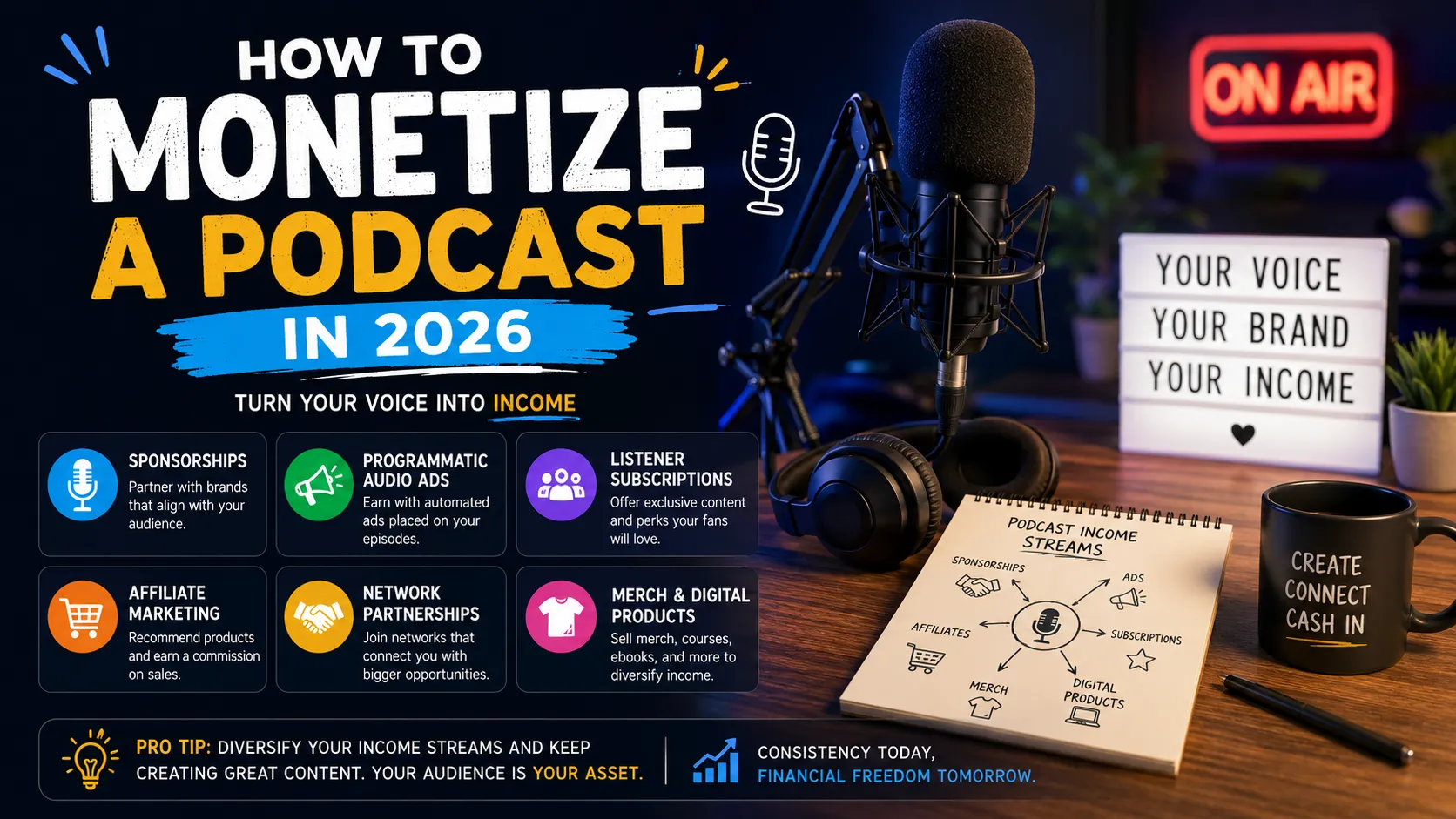
The good news? In 2026, podcast monetization is way more flexible. Sponsorships still matter, but now you also have programmatic audio ads, affiliate deals, listener subscriptions, and network partnerships. This guide breaks down what each one pays and helps you figure out the smartest mix for your show.
What Does Podcast Monetization Actually Look Like in 2026?
Podcast monetization means turning your show into a source of income rather than a pure cost center. For some hosts that’s covering hosting and editing fees. For others it’s a full-time income replacing a day job.
There’s no single correct path. A show with 300 downloads an episode and a show with 300,000 downloads need entirely different strategies, and applying the wrong one at the wrong stage is the most common reason podcasters give up on monetization altogether.
Three broad categories cover almost everything below:
- Advertising and sponsorships — brands pay for placement in your episodes
- Direct listener support — your audience pays you, through memberships, tips, or premium content
- Your own products and services — courses, coaching, merch, or consulting sold through the podcast as a channel
Most sustainable shows eventually run two or three of these at once rather than relying on a single stream.
How Do Sponsorships and Ad Reads Still Pay the Bills?
Sponsorships remain the most recognized monetization method, and CPM (cost per thousand downloads) is still the pricing model most brands understand. Rates typically run $18–$50 CPM depending on niche and audience quality, with finance, B2B, and luxury verticals commanding the high end and general entertainment sitting closer to $10–$15.
Ad placement comes in three flavors:
| Ad Type | Typical Length | Placement |
| Pre-roll | 15–30 seconds | Before the intro or cold open |
| Mid-roll | 30–90 seconds | Around the episode’s midpoint |
| Post-roll | 15–30 seconds | After the episode ends |
Mid-roll ads generally command the highest rates since listener drop-off is lowest there. If you’re pitching sponsors directly rather than going through an agency, a short, specific pitch that names the exact segment of your audience a brand would reach tends to land better than a generic media kit.
Should You Join a Podcast Network or Go Independent?
Networks bundle your show alongside others to sell ad inventory at scale, which gets you access to bigger sponsors than you could land solo — particularly useful if your download numbers are still building. The trade-off is a revenue cut, usually somewhere between 20% and 50%, and less control over which brands appear on your show.
Going independent means keeping the full sponsorship fee, but you’re responsible for prospecting, pitching, invoicing, and delivering ad reads yourself. For shows under roughly 5,000 downloads per episode, a network’s existing sponsor relationships often outweigh the revenue split. Past that threshold, many podcasters find direct deals more profitable once they’ve built a track record.
How Does Programmatic and Dynamic Ad Insertion Fit In?
Dynamic ad insertion (DAI) has changed what “selling an ad slot” even means. Instead of a permanent, host-read spot baked into the file, DAI lets two listeners hear entirely different ads in the same episode based on location or listening history — and it’s one of the reasons podcast ad revenue keeps climbing even as the format matures.
Programmatic buying extends that further, letting advertisers bid on impressions the same way they’d buy display inventory, but for audio. MonetizePros has a full breakdown of how programmatic buying works across formats if you want the mechanics, and a separate guide covering current CPM rates for programmatic audio ads by niche. For publishers layering audio into an existing site, our guide to programmatic audio and podcast ads covers how to test fill rates before committing.
The advantage for smaller shows: platforms like Spotify’s Megaphone and Acast now offer opt-in programmatic programs that don’t require you to have a sales team or a network deal to start earning.
Can Affiliate Marketing Replace Sponsorship Income?
Affiliate marketing is often the fastest monetization method to start, since it doesn’t require any minimum download count. You mention a product you actually use, share a tracked link or promo code, and earn a commission on resulting sales.
It works best when the recommendation is specific and believable rather than a generic ad read. A host mentioning a meal-kit service saved a specific dinnertime argument converts better than a scripted “our sponsor this week is…” line, because it sounds like something a friend would actually say. For a deeper look at structuring these deals, see MonetizePros’ affiliate marketing strategies for niche publishers.
The catch: affiliate income scales with trust, not just downloads. A smaller, highly engaged audience often converts better than a much larger, passive one.
Is Listener Support Worth Setting Up?
Patreon, Buy Me a Coffee, and Apple Podcasts Subscriptions all let your most loyal listeners pay directly, usually in exchange for ad-free episodes, early access, or bonus content. One podcaster in the software-career space built a $150,000 membership community around peer learning and job-transition content — proof this can work well past the hobby stage, though results that size are the exception, not the baseline.
The appeal is predictability. Unlike sponsorship deals that can fall through between seasons, membership revenue tends to hold steady month to month once a base of subscribers is in place. The trade-off is workload: someone has to keep producing bonus content that actually feels worth paying for, not just a “thanks for supporting us” clip.
What Other Revenue Streams Are Publishers Testing in 2026?
A few side hustles are catching on beyond the main three:
Video/YouTube Versions
Recording video while you make the audio is like giving your podcast a second life. Suddenly, you can earn ad revenue through YouTube and give sponsors something visual to work with — which is a big deal if your show is usually just voices and vibes.
Merchandise
T-shirts, mugs, stickers, the whole “I made this because people kept quoting my joke” package. Print-on-demand makes it easy, so you do not need to order a mountain of merch and pray it sells.
Digital Products
Courses, ebooks, or consulting can work really well when your audience already trusts you. Basically, if people keep coming back for your advice, they may actually pay for the full meal instead of just the free sample.
Community Features
Discord servers and subscriber forums give fans a place to hang out between episodes. That extra community feeling can make paid memberships feel worth it, not like they are just paying for “more content.”
None of these are magic money buttons. They work best as add-ons once your main revenue stream is already solid.