

The old rules of digital advertising are basically falling apart. Third-party cookies are being phased out, privacy rules are getting stricter, and the brands that relied on tracking people everywhere are having to start over.
But if you’ve been building real connections with your audience, this is your moment. First-party data is the gold mine now — and the big question isn’t whether to use it, but how to turn it into real money. Here’s how brands are doing that in 2026 and beyond.
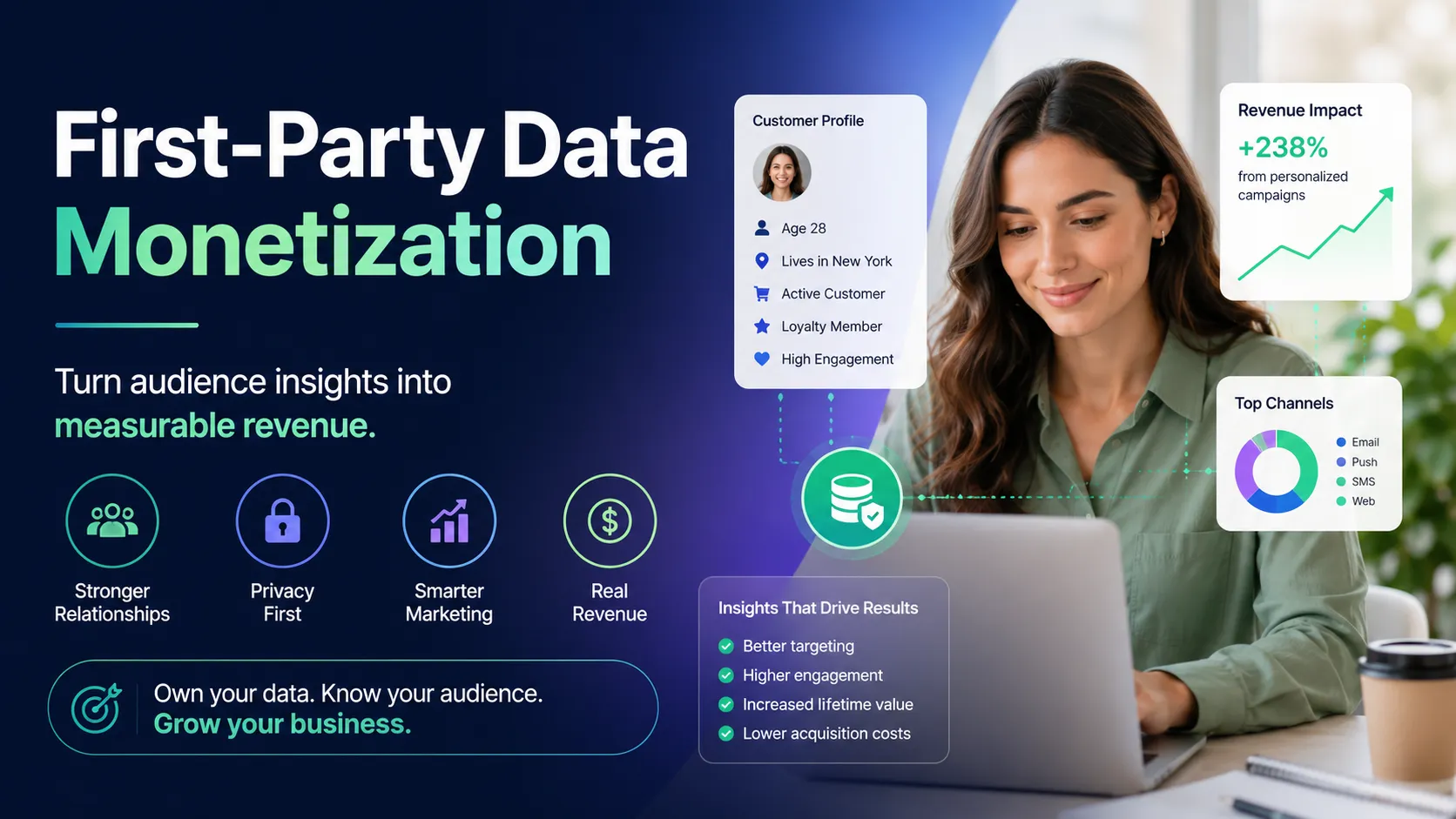
What Is First-Party Data, and Why Does It Matter More Than Ever?
First-party data is the stuff people give you directly when they deal with your brand — like what they click, buy, open, or tell you on your site, app, emails, or loyalty program.
It’s like knowing your customers because they actually talked to you, not because some random tracker followed them around the internet like a lost puppy.
This includes:
- Behavioral data: pages visited, products browsed, time on site
- Transactional data: what people buy, how much they spend, how often they come back
- Declared data: preferences, interests, and info they share on purpose
- Engagement data: email opens, clicks, app activity
In short, the data you own beats the data you borrow. And in a privacy-first world, that matters a lot.
How Do You Build a First-Party Data Asset Worth Monetizing?
Before you can make money from first-party data, you need to collect it the right way — clearly, honestly, and without being creepy. A lot of brands already have a ton of useful data. They just have it scattered around like socks in a teenager’s bedroom.
Start With a Data Audit
Map every place people interact with your brand and see what you’re collecting — and what you’re missing. Common messes include untracked website clicks, CRM data that does not talk to anything else, and loyalty data sitting in its own little bubble.
Create Compelling Value Exchanges
People share data when it actually helps them. Nobody hands over their info for “vibes.” Good value exchanges include:
- Loyalty and rewards programs
- Personalized product recommendations
- Exclusive content, early access, or members-only discounts
- Preference centers that let people control their experience
- Interactive tools like quizzes, calculators, or configurators
Implement a Customer Data Platform (CDP)
Tools like Segment, Salesforce Data Cloud, or Adobe Real-Time CDP pull everything together into one clean customer profile. Think of it like giving your data a brain instead of letting it roam around like a confused robot.
Prioritize Consent and Compliance
Trust is everything. If people do not feel safe, they are gone. Make sure your data collection follows GDPR, CCPA, and whatever rules apply, with clear opt-ins and real control for users.
What Are the Proven Strategies to Monetize First-Party Data?
1. Fuel Personalization at Scale
This is where the magic happens. When you know what people actually do, you can send the right message at the right moment instead of shouting random ads into the void.
Personalized email, push notifications, smart website experiences, and tailored product recommendations can all boost sales and make customers feel seen — like, “Hey, this brand gets me.”
2. Build and Activate High-Value Audience Segments
Your data can help you find the people who are most likely to buy, return, or spend more. Think: people who looked at a product three times, abandoned a cart, or VIP customers who have gone quiet.
You can use those groups on your own channels or upload them to ad platforms like Google, Meta, and LinkedIn to reach real customers without depending on third-party cookies.
3. Launch a Data Clean Room Strategy
Data clean rooms are secure spaces where brands and partners can work with shared insights without exposing raw data. Fancy name, simple idea: everyone gets useful answers, nobody gets handcuffed to a privacy disaster.
They help with reach measurement, attribution, and privacy-safe audience sharing. For bigger brands, they can also unlock partnerships and smarter cross-sell deals.
4. Create a Retail Media or Publisher Network
If you have a big, loyal audience, you may be able to sell access to it. That is basically what retail media networks and publisher ad programs do.
Amazon made this model huge, but now retailers and publishers in all kinds of industries are doing it too. Even smaller brands can join in with sponsored placements, targeted newsletters, or co-branded content.
5. Improve Lookalike Modeling and Prospecting
First-party data helps you find more people like your best customers. It is like saying, “Find me ten more people who shop like my favorite buyer.”
Because the data comes from real customers, the matching is usually smarter and cheaper than broad interest targeting. That means better results and less wasted ad money.
6. License or Share Data Through Partnerships
If your data is especially strong, you may be able to share anonymized insights with trusted partners. This can create new revenue without giving away the whole kitchen sink.
Examples include:
- B2B data licensing: sharing anonymized insights with related brands
- Co-op data partnerships: pooling signals with complementary brands
- Research partnerships: licensing aggregated data to research groups or industry partners
How Do You Measure the ROI of First-Party Data Monetization?
This is not a one-and-done trick. It is more like building a superpower that gets stronger over time. To see if it is working, track:
- Revenue per customer: are people worth more because your data is better?
- Customer acquisition cost (CAC): are you spending less to win new customers?
- Campaign return on ad spend (ROAS): are your ads working smarter, not harder?
- Email/push revenue per send: are your messages actually making money?
- Data match rate: how much of your audience can you use across platforms?
Always track your starting point first. Otherwise, you are basically trying to say a sandwich got bigger without ever measuring the bread.
Conclusion: The Brands That Win Will Be the Brands That Own Their Data
The message is pretty simple: the brands that own their data will win. Cookies are fading, privacy rules are tighter, and people are smarter about what they share.
This is not just about better ads. It is about building a real relationship with your audience — one that does not disappear when a platform changes the rules. Start with small moves, like cleaning up your CRM, improving email personalization, or using Customer Match. Every step makes your brand stronger, safer, and harder to copy.
The brands that start now will be the ones everyone else is trying to catch up to later.