

You’ve definitely seen this before — someone casually talking about a face wash or unboxing a gadget like it’s no big deal. It feels random, almost like they just hit “record” and went with it.
But here’s the truth: people are getting paid for that. Sometimes a lot.
And right now? Brands are hungry for this kind of content.
If you’re 15 and thinking, “Wait… I could do that?” — yeah, you actually can. This isn’t one of those “you need 100K followers” situations. In 2026, brands care way more about content that feels real than content that looks perfect. Why? Because people trust real people. Not ads that scream “BUY THIS NOW.”
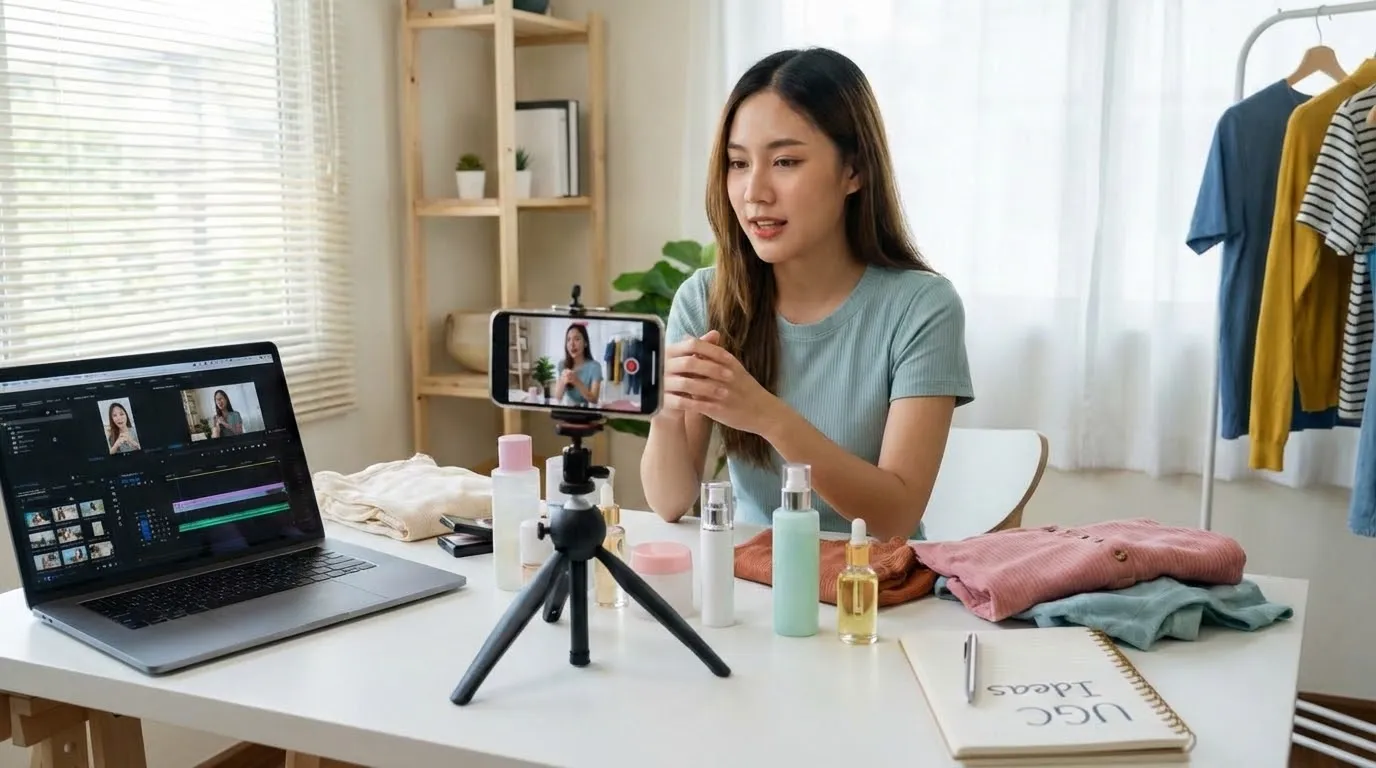
What Is a UGC Creator (and What It Isn’t)
Let’s clear this up, because most beginners get this wrong.
A UGC (User-Generated Content) creator is basically someone who makes content for brands — like reviews, unboxings, or “this changed my life” type videos.
But here’s the key part: You’re not posting it for your audience. You’re selling the video itself to the brand.
Think of it like this:
- Influencers = “Pay me because I have followers.”
- UGC creators = “Pay me because I can make your product look good.”
Big difference.
And honestly? This is the best part — you don’t need to be famous, rich, or have a fancy setup. No ring light? No problem. Awkward on camera? Everyone is at first.
Brands don’t want perfect. They want real.
Like “filmed this in my room at 10PM” kind of real.
So if you can talk like a normal human, share your opinion, and not sound like a robot… you’re already ahead of most people trying to get into this.
Step 1: Choose Your Niche
Here’s a mistake almost everyone makes at the start: trying to be “for everyone.”
That’s like saying, “I like all music” when someone asks your favorite artist. Cool… but also useless.
In 2026, being specific wins.
Why?
- Brands want someone who gets their audience
- And when you understand people better, you can charge more
So don’t overthink it — just look at your actual life.
What do you already use or care about?
- Into skincare? That’s a niche
- Love gaming? That’s a niche
- Always organizing your room or desk? Yep, that’s a niche too
Real talk: your “normal life” is your advantage.
If you already use something, talking about it won’t feel fake — and brands can tell the difference instantly.
Some popular niches right now:
- Beauty & skincare
- Fitness & wellness
- Tech & apps
- Food & drinks
- Travel
- Pets
- Finance
Once you pick one, go stalk (nicely) brands in that space.
If they’re already running TikTok-style ads, that’s your green light — they’re spending money.
Step 2: Build Your Portfolio (Even Without Paid Experience)
This is where people freeze.
They spend weeks thinking:
“Should I buy a better camera?”
“Which app should I use?”
Meanwhile… they haven’t made a single video.
That’s not preparation. That’s procrastination wearing glasses.
Here’s the truth: Brands don’t care what you plan to do. They care what you’ve already done.
So do this instead:
- Pick 3–5 products you already own
- Pretend a brand hired you
- Make content for them anyway
That’s called “spec content” — and yes, it works.
Keep it simple:
- One video talking about your experience
- One showing how it works
- One just using it in real life
No fancy setup needed. Your phone is enough for most projects. As you gain experience, you can experiment with other recording tools, including glasses that record video, to capture hands-free perspectives when they make sense for the story you’re telling.
Good lighting + clear audio = you’re already ahead of most beginners.
Then put everything in one clean place:
- Google Drive
- Notion
- Simple website
Think of your portfolio like your online shop. If a brand clicks it and gets confused or bored… they’re gone.
But if it’s clean, clear, and real? That’s when things start happening.
Step 3: Know Where to Apply
Once you have a portfolio (even a small one), it’s time to get in front of brands. There are three main paths.
UGC Platforms and Marketplaces
These are purpose-built platforms that connect brands with UGC creators. They handle briefs, payments, and often brand communication, so you can focus on creating. Some of the most active platforms in 2026 include:
- Influee — known for fast applications and strong brand deals, particularly for video content
- Insense — operates as a campaign hub where brands post briefs and invite creator applications, with a focus on video ads
- Collabstr — connects influencers and UGC creators with brands through direct booking; create a profile and brands come to you
- Billo — focuses on short-form video performance rather than follower counts
- Twirl — handles all brand communication on your behalf; compensation ranges from $90 to $300+ per project depending on deliverables (Twirl, 2026)
- Fiverr and Upwork — great for beginners; create a listing like “I will create authentic TikTok videos for your brand” with an introductory rate to attract your first buyers
Pitching Brands Directly
Direct outreach is more effort, but it can lead to better-paying, longer-term relationships. Here’s how to do it well:
- Make a shortlist of small to mid-sized brands in your niche that are already running social ads or have an active social presence.
- Research the brand before reaching out — understand their products, tone, and target audience.
- Write a concise pitch that focuses on what you can do for them, not your follower count.
- Engage with their content for a few days before pitching — it increases visibility and warms the relationship.
- Follow up once not multiple times.
Agency Applications
Some digital marketing agencies (like Brighter Click) maintain their own creator networks and accept direct applications from UGC creators. The application process typically involves submitting your name, niche, social links, and content samples. If accepted, you’re matched with brand briefs that suit your style and get paid upon content approval. These applications usually take under five minutes to complete (Brighter Click, 2026).
Step 4: Price Your Work Correctly
Pricing is one of the most stressful parts of becoming a UGC creator — but it doesn’t have to be.
Standard 2026 beginner rates in the US market:
- Single UGC video: $150–$250 (beginners)
- Experienced creators: $300–$800+ per video
- Twirl platform average: $90–$300+ per project
Beyond the base rate, you can (and should) charge extra for:
- Usage rights / licensing — if the brand wants to use your video in paid ads, on their website, or in email campaigns, that’s additional value you’re providing. This is a significant source of income that many beginners leave on the table.
- Raw footage — some brands want the unedited files
- Whitelisting / Spark Ads — allowing brands to run ads through your account
- Multiple hooks or variations — creating several versions of the same video
Step 5: Nail Your Application
Whether you’re applying to a platform, pitching a brand directly, or filling out an agency application form, the quality of your application matters more than most people realize.
What makes a strong UGC application:
- Portfolio samples that match the brand’s aesthetic — don’t submit beauty content to a tech brand
- A clear niche statement — “I create UGC for sustainable home brands” is more compelling than “I create all kinds of content”
- Proof of reliability — mention any completed projects, deadlines you’ve met, or positive feedback from past clients
- A professional tone — respond quickly, communicate clearly, and show you’re easy to work with
According to Brighter Click (2026), two things matter above all else in their creator review process: content quality and reliability. “Brands cannot hire your intentions. They can only judge what you show them.”
Step 6: Treat It Like a Business
The UGC creators who build sustainable income in 2026 are the ones who treat content creation like a business — not a hobby.
That means:
- Using contracts — never deliver content without a signed agreement or upfront payment
- Tracking your pitches and applications — know who you’ve contacted, when, and what the outcome was
- Building templates — create reusable outreach emails, rate cards, and creative briefs to save time
- Developing editing workflows — consistency and speed matter as your workload grows
- Pursuing long-term brand relationships — a brand that hires you repeatedly is more valuable than a series of one-off projects
The Tools You’ll Need
You don’t need a studio. Here’s what actually matters:
| Tool | What For |
| Smartphone (recent model) | Primary camera for most UGC |
| Ring light or window light | Clean, professional-looking lighting |
| Lavalier or directional mic | Clear audio — this is non-negotiable |
| CapCut or DaVinci Resolve | Video editing |
| Canva | Portfolio design and media kits |
| AI captioning tools (CapCut, Descript) | Accessibility and engagement |
| Google Drive or Notion | Portfolio hosting |
AI tools have become a standard part of the UGC workflow in 2026 for generating script hooks, captioning, and audio enhancement. Use them as a support tool, but ensure your content still feels distinctly human. As one industry guide notes, “The 2026 market values the human element of UGC”.
Common Mistakes to Avoid
- Waiting until everything is “perfect” before applying — start with what you have
- Ignoring usage rights — always clarify how a brand intends to use your content
- Underpricing out of desperation — starting low is fine; staying low is a trap
- Applying to every platform at once — focus on one or two, get reviews, then expand
- Skipping the contract — even small deals should be documented
- Creating content without understanding the brief — always ask clarifying questions before filming
Conclusion
Applying to be a UGC creator in 2026 is one of the more accessible paths into the creator economy — but accessible doesn’t mean automatic. Success requires a clear niche, a credible portfolio, a proactive outreach strategy, and the discipline to treat your creative work as a professional service.
The brands are out there, the platforms exist to connect you with them, and the demand for authentic content is only growing. What you need now is to take the first step: create three spec videos this week, put together a simple portfolio, and start applying.
Your first paid brief is closer than you think.