

In the fiercely competitive world of online retail, having a gorgeous store is cool—but totally useless if nobody can find it. Think of SEO like putting a giant neon sign over your shop so people don’t walk right past it. For many online stores, this “neon sign” brings in over 40% of their money!
The tough part? Ecommerce SEO is like juggling flaming swords while riding a skateboard—you’ve got tons of product pages, tricky tech stuff, and giant competitors with ridiculous budgets. But here’s the good news: even small stores can outrank big brands with the right moves and a bit of determination.
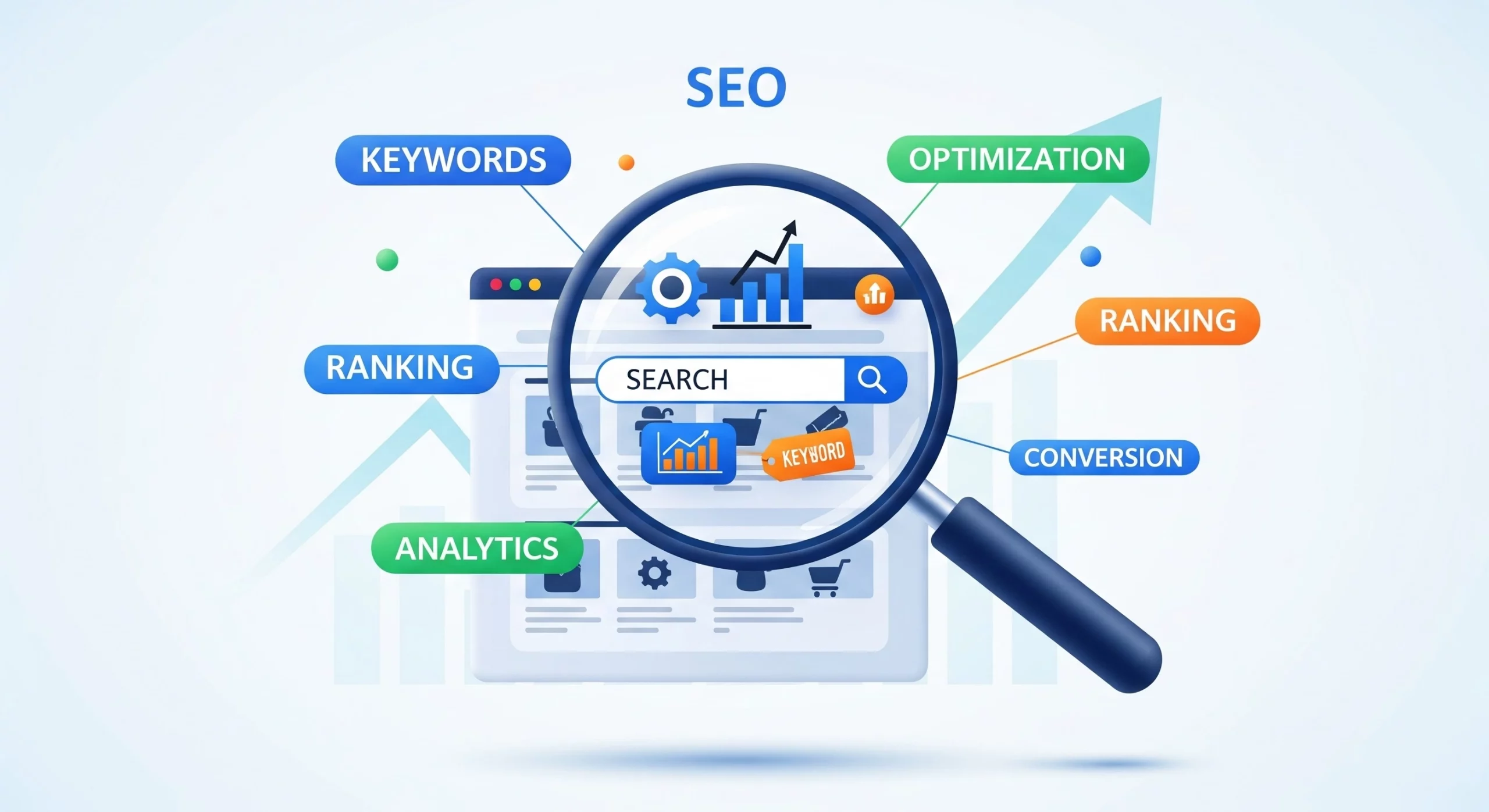
Optimize Your Site Architecture for Both Users and Search Engines
Alright, imagine your website is a giant digital mall. If everything is messy and confusing, people will bounce faster than you did the last time you walked into a store and couldn’t find the checkout. A clean site structure helps Google understand your pages and helps real humans find what they want without rage-clicking.
Homepage Hierarchy
Your homepage is the mall entrance—the big shiny doors. From there, you should lead visitors to clear category areas (like “Shoes” or “Electronics”), and then deeper into subcategories, and finally into the exact product pages. If someone needs more than three clicks to find what they want, your site is basically a scavenger hunt… and not the fun kind.
Clear Navigation Menu
Your navigation menu should be so clear even your half-asleep cousin could figure it out. Use labels that actually mean something, not vague words like “Explore.” Breadcrumbs are amazing too—they’re basically little arrows saying, “Hey, here’s how you got here.” They help people and Google understand your site’s roadmap. Add schema markup so search engines don’t have to guess.
URL Structure
Your URLs shouldn’t look like secret codes written by aliens. Clean, readable URLs help Google understand what the page is about. So instead of “yourstore.com/product?id=12345,” use something normal like “yourstore.com/womens-shoes/running-shoes/trail-running.” Humans and search engines both appreciate the clarity.
Conduct Strategic Keyword Research for Product Pages
Keyword research for ecommerce isn’t about finding words people are curious about—it’s about finding words people search right before they whip out their credit card.
Focus on Product-Specific Keywords
Look for keywords that scream, “I’m ready to buy!” Words like “buy,” “shop,” “order,” or specific details like size or material. Someone searching “women’s waterproof hiking boots size 8” isn’t browsing—they’re practically shouting, “Take my money!” Long-tail keywords like this convert way better than vague ones.
Research Competitor Keywords
Your competitors have already done half the homework—use that. Tools like Ahrefs or SEMrush can show you exactly what keywords they rank for. You’re not cheating; you’re being strategic. Aim for keywords that have solid search volume but aren’t impossible to beat.
Don’t Overlook Branded Searches
If you sell big-name brands, don’t forget that people often search by brand + product type. These searches are gold because the shopper already knows what they want—they’re basically window-shoppers who already have their wallets out. Optimize for those combos and scoop up that sweet, sweet commercial intent.
Create Unique, Compelling Product Descriptions
One of the biggest mistakes online stores make is copying the manufacturer’s description—it’s basically turning in the same homework as everyone else in class and expecting the teacher (Google) to pick you as the favorite. Spoiler: it won’t.
Write Unique Product
When you write your own product descriptions, you’re giving Google something new to rank and giving shoppers real info they actually care about. It’s like adding your own flair to an assignment—suddenly you stand out.
Product Descriptions
A strong description hits all the important notes: use your main keywords early, answer the questions customers are secretly stressing about, explain what makes the product special, sprinkle in secondary keywords naturally, and don’t forget real details like size, materials, features, and anything that matters to the buyer.
Comprehensive Information
Length depends on how complex the product is, but shoot for at least 300 words. If it’s a pricey or complicated item, go big—500 to 1,000 words. Think of it like explaining why your new gaming mouse is amazing to your friend who might buy the same one—you give all the details, right? Same idea here.
Optimize Product Images for Search and User Experience
Images are everything in ecommerce, but so many stores treat them like afterthoughts. Google’s image search can bring tons of traffic—if you actually help Google understand what your images are about.
Product Descriptive
Rename your image files before uploading. “IMG_1234.jpg” tells Google nothing. But “womens-leather-ankle-boots-brown.jpg” basically screams, “Yo Google, put me in the right search results!”
Alt Text
Alt text is like whispering a description of the image into Google’s ear. Be clear, be descriptive, but keep it natural: “brown leather ankle boots with side zipper for women.” This also helps people using screen readers, so it’s a win-win.
Compress Images
Huge images slow your site down, and slow sites make visitors leave faster than you leave a room after someone microwaves fish. Compress your images with tools like TinyPNG or ImageOptim—your site will load faster without looking ugly.
Structured Data Markup
If you want your product images to show up in fancy rich results or Google Shopping features, add structured data markup. It’s like giving your images a VIP pass to stand out on Google.
Leverage Customer Reviews for SEO Benefits
Customer reviews are basically SEO treasure—free content that customers write for you, and Google absolutely loves it. Every review adds fresh text filled with real-life words people actually type into search engines (not the fancy marketing stuff you see in ads).
Reviews help your product pages show up for natural, conversational searches. When customers describe things in their own way—“these shoes actually survived my 3-hour hike,” or “the keyboard is clicky but not too clicky”—they’re giving you long-tail keywords you could never brainstorm on your own.
From the technical side, add structured data markup so your review stars can appear in Google results. Those little gold stars? They make people click way more—like 15–35% more—because we humans are basically magpies attracted to shiny things.
Encourage customers to leave reviews by making it stupidly easy, and maybe reward them with a small discount. The more reviews you get, the more unique content your pages have… which makes Google very, very happy.
And don’t ghost your reviewers—respond to them! Whether someone’s praising your product or calling it “mid,” replying shows you care and adds even more content for search engines to eat up.
Implement Technical SEO Best Practices
Technical SEO is like the behind-the-scenes magic that makes the whole website work smoothly—kind of like the WiFi router you only notice when it breaks. For ecommerce sites, getting these parts right is non-negotiable.
Site Speed is Crucial
If your site loads slowly, people will leave faster than you leave a group chat when the drama gets weird. About 40% of users dip after three seconds—three! Use tools like PageSpeed Insights to figure out what’s slowing things down. Compress files, cache stuff, slim down your code, and use a CDN so your site loads like a champ.
Mobile Optimization
Most online shopping now happens on phones—over 60%! So your site needs to look and work great on mobile. That means readable text, buttons big enough for actual thumbs, and layouts that don’t require zooming like you’re trying to spy on ants.
Implement HTTPS
HTTPS isn’t optional. It keeps your site secure, boosts rankings, and prevents browsers from shouting, “WARNING: THIS SITE IS SKETCHY!” at your customers. If people think your site is unsafe, they’re not buying anything.
Create and Submit an XML Sitemap
An XML sitemap is basically a cheat sheet for Google saying, “Here’s everything on my website—please index it!” Big ecommerce stores should create multiple sitemaps or a sitemap index to keep things organized.
Use Canonical Tags
Ecommerce sites almost always have duplicate pages—same product, different paths. Canonical tags tell Google which version is the “main” one so you don’t get penalized for duplicates. It’s like telling your teacher, “No, I didn’t copy; these are just different drafts.”
Build High-Quality Backlinks
Backlinks are like reputation points on the internet. When trustworthy websites link to you, Google says, “Hey, this site must be legit.” Quality beats quantity every time.
Create Linkable Assets
Want people to link to you? Give them something worth linking to—epic buying guides, original research, helpful infographics, or expert roundups. Make stuff so useful that people want to share it.
Pursue Partnerships
If you work with other businesses, use that to your advantage. Manufacturers, partners, and industry organizations often list or link to their retailers. If you’re an authorized dealer, that’s basically a free backlink waiting for you to claim.
Leverage PR Opportunities
Got a cool story? New product? Charity project? Fun milestone? Share it with the world. News sites love interesting stories, and their backlinks are SEO gold.
Finding Broken Links
Broken link building is like being the hero who fixes dead ends on other websites. Find broken links on sites in your niche and offer your content as a replacement. You help them clean up their site—and score a high-quality backlink in return.
Create Content Beyond Product Pages
Your product pages are the MVPs, but they can’t win the whole game alone. You need supporting content—kind of like having a solid squad behind your star player. A blog lets you answer all the questions people search before they’re ready to buy, like “How do I style this?” or “Which one is better?” Buying guides and comparison articles help shoppers feel confident, and they naturally point people back to your products. Even your category pages shouldn’t just be plain lists—add helpful, keyword-rich explanations so visitors actually understand what they’re looking at.
Monitor, Measure, and Refine Your Strategy
SEO isn’t a “set it and forget it” thing—it’s more like caring for a plant. If you ignore it, it dies. Use Google Analytics and Search Console to see what’s working, what’s failing, and where people are bouncing like they just touched a hot stove. Track traffic, rankings, conversions, and backlinks so you know whether your efforts are paying off. Run regular audits to catch broken links, tech issues, and other gremlins that pop up as your site grows. And stay updated—Google changes its algorithm like teenagers change their favorite apps, so you’ve got to keep adjusting your strategy to stay ahead.
Conclusion
Winning at ecommerce SEO isn’t about one magic trick—it’s about stacking a bunch of smart moves that work together. Think of it like building a giant LEGO castle: you start with a solid base (your technical setup), then add cool towers (your product pages), and finally decorate it with epic details (your content). It takes effort, but wow, the payoff is worth it.