

This guide was compiled by researching publicly available commission structures, cookie durations, and approval requirements directly from affiliate networks (CJ Affiliate, Impact, ShareASale, Awin) and insurer-run programs, cross-checked against multiple independent affiliate marketing sources. Every figure below reflects a range reported by more than one source as of mid-2026. Commission terms change often, so always confirm current rates on the advertiser’s official affiliate page before applying.
If you run a finance, insurance-comparison, or personal-finance blog and you’re evaluating insurance affiliate programs high commission options, this guide breaks down what “high commission” actually looks like in this niche, which programs currently pay the most, and how to choose one that fits your traffic.
Why insurance affiliate programs pay so well
Insurance is one of the highest-paying verticals in affiliate marketing, and it isn’t close. A policyholder can generate revenue for an insurer over years or decades of premium payments, so insurers are willing to pay far more per lead or sale than retail or lifestyle brands typically offer. That’s the core reason insurance affiliate programs high commission structures exist: insurers are effectively bidding for long-term customer value, not just a single transaction.
Three payout models dominate the space:
- CPL (cost per lead): You get paid when a visitor submits a quote request or contact form, whether or not they buy.
- CPS (cost per sale): You only get paid once the lead becomes a paying policyholder.
- Hybrid: A smaller upfront lead fee plus a bonus when the policy converts.
CPL offers tend to have lower individual payouts but convert faster since the bar for a “sale” is just a form submission. CPS and hybrid offers pay significantly more per action but take longer to pay out, since insurers verify the policy actually goes live.
What “high commission” actually means in this niche
Commission benchmarks vary a lot by insurance type, but based on current publisher-facing terms:
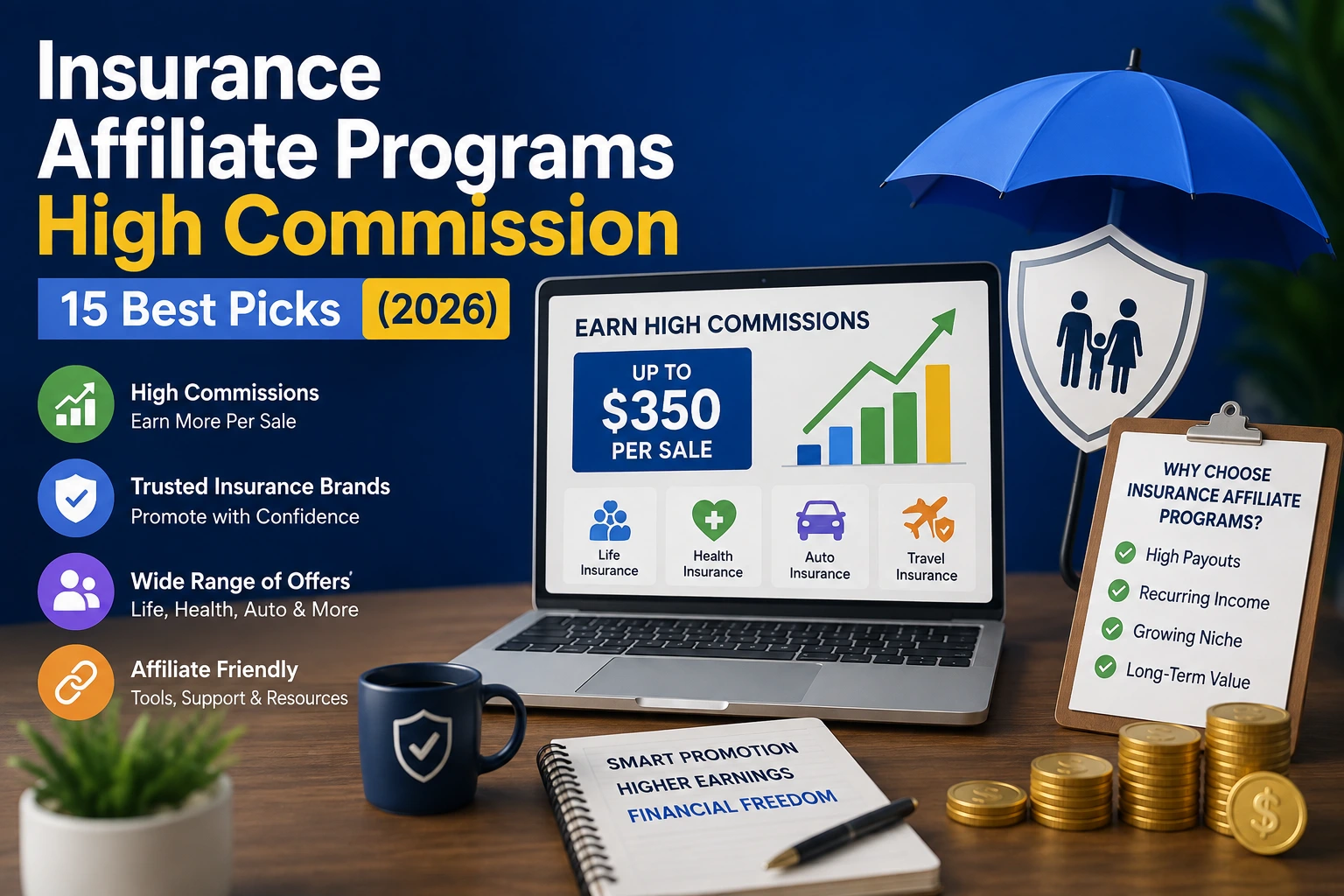
| Insurance type | Typical commission range | Notes |
|---|---|---|
| Life insurance | $15–$100+ per qualified lead, or up to ~$55 per lead on some pay-per-lead programs | Highest-paying category overall due to long policy terms |
| Auto insurance | $3–$40 per quote or completed lead | High volume, brand-name insurers convert well |
| Home/renters insurance | $15–$30 per lead or sale | Often bundled with auto in comparison content |
| Health/supplemental insurance | $16–$50 per qualified lead | Strong fit for health and wellness content |
| Pet insurance | $25–$125 per sale | Fast-growing niche with year-round search demand |
| Travel insurance | 5%–20% commission per policy, with some programs offering cookie windows up to 90 days | Percentage-based, so higher-value trips pay more |
These figures illustrate why insurance consistently ranks among the highest-paying affiliate verticals, alongside finance and legal niches, when advertisers are asked to name insurance affiliate programs high commission options worth pursuing.
Insurance affiliate programs worth evaluating
Below is a snapshot of programs frequently cited for strong payouts. Verify current terms directly with each program before joining, since rates and cookie windows are adjusted regularly.
- Life insurance: Programs like Haven Life, Ethos, and Bestow are frequently highlighted for no-medical-exam, digital-first term life products with commissions that scale well for personal finance content.
- Auto and home insurance: Allstate, Liberty Mutual, and USAA are commonly run through CJ Affiliate or similar networks, typically paying per completed quote rather than per policy — which lowers the bar for a paid action.
- Health and supplemental insurance: Programs such as Aflac and eHealth pay per qualified lead and suit content aimed at families or self-employed audiences shopping for coverage.
- Pet insurance: Newer comparison-driven platforms in this space have some of the highest per-sale payouts in the entire insurance category.
- Travel insurance: Programs vary widely by cookie length and geographic eligibility, so this category rewards affiliates who read the fine print before committing to one provider.
How to choose the right program for your audience
Picking from the many insurance affiliate programs high commission listings requires matching the offer to your traffic, not just chasing the highest number on a rate card. Consider:
- Payout model fit. If your traffic is early-funnel (informational searches), a CPL program converts more easily than a CPS one. If your content already ranks for high-intent, comparison-style queries, CPS or hybrid offers pay more per visitor.
- Cookie duration. Insurance shoppers often compare quotes across multiple sessions. A 5-day cookie window credits you far less often than a 30–90 day window.
- Brand recognition. Recommending a name your reader already trusts (a major national insurer, for example) tends to convert better than sending traffic to an unfamiliar quote engine.
- Approval requirements. Many insurance programs manually review applicants and require an active site with relevant financial or insurance content — thin affiliate sites are often rejected.
- Payment reliability and reporting. Established networks like CJ Affiliate, Impact, and Awin generally offer more consistent reporting than a direct in-house program with limited support.
How to maximize commissions from insurance affiliate content
- Target high-intent, long-tail queries. Searches like “best term life insurance for freelancers” or “cheapest auto insurance for new drivers” convert far better than broad, top-of-funnel terms.
- Build comparison content. Side-by-side breakdowns of coverage, price, and eligibility routinely outperform single-provider reviews because they match how people actually shop for insurance.
- Diversify across 2–3 programs per vertical. Relying on a single insurer limits your earnings if that program lowers commissions or tightens approval standards.
- Disclose your affiliate relationships clearly. FTC guidelines require a clear, conspicuous disclosure near any affiliate link or recommendation — this also builds the trust that drives conversions.
- Track EPC (earnings per click), not just commission rate. A program with a lower headline rate but a shorter, easier conversion path can out-earn a high-commission program with a slow sales cycle.
Compliance and trust considerations
Because insurance touches consumers’ financial decisions, affiliates should treat it the way search engines and regulators treat medical or financial advice content — with extra care around accuracy. Avoid guaranteeing savings, quoting rates you can’t verify, or implying you’re a licensed agent unless you actually are one. Cite the insurer’s own rate and eligibility information rather than estimating figures, and keep your affiliate disclosures visible, not buried in a footer.
Frequently Asked Questions
What are insurance affiliate programs with high commission?
Insurance affiliate programs with high commission are partnerships where insurers or comparison platforms pay affiliates $15–$100+ per qualified lead, or 5%–20% of a policy’s value, in exchange for referred customers. Life and pet insurance categories tend to pay the most per action.
Which insurance niche pays the highest commission?
Life insurance generally offers the highest per-lead payouts, often $15–$100+ depending on the program, because policies represent decades of premium value to the insurer. Pet insurance and travel insurance also pay competitively, with some pet programs reaching $125 per sale.
Do insurance affiliate programs pay per lead or per sale?
Both models exist. CPL (cost per lead) programs pay when a visitor submits a quote request, while CPS (cost per sale) programs only pay once the lead becomes a paying policyholder. Hybrid programs combine a smaller lead fee with a bonus on conversion.
How long are cookie durations for insurance affiliate programs?
Cookie durations typically range from 5 to 90 days depending on the program. Shorter windows (5–30 days) are common with major national insurers, while some travel and niche insurance programs offer 60–90 day windows to account for longer comparison-shopping cycles.
Do I need a license to promote insurance affiliate programs?
No, affiliates generally don’t need an insurance license to refer traffic to a quote or comparison page, since you aren’t selling or advising on policies directly. However, you should avoid language that implies you’re a licensed agent and should stick to factual, verifiable information about coverage and pricing.
Are insurance affiliate programs beginner-friendly?
Some are. Programs with lower traffic requirements and simpler applications (often travel or pet insurance offers) are more accessible to newer publishers, while major insurers like Allstate or USAA typically require an established site with relevant content and manual approval.
How much can you realistically earn from insurance affiliate programs?
Earnings depend heavily on traffic volume and intent. A site generating a modest number of high-intent, comparison-focused visitors per month can realistically earn hundreds to low thousands of dollars monthly once a few CPL and CPS programs are combined, though results vary widely by niche and content quality.